Tuesday, December 3, 2013

Goin' nuts


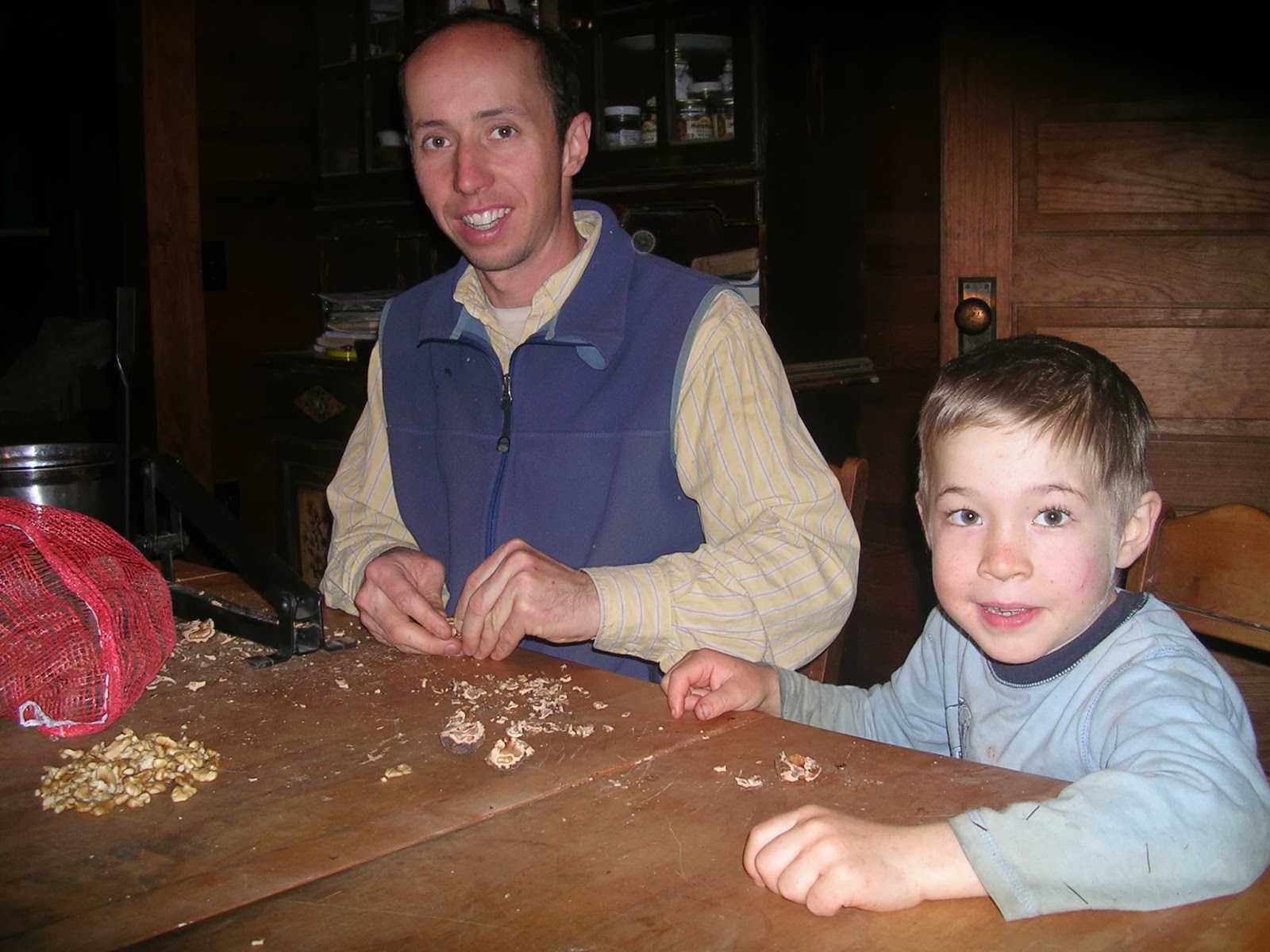
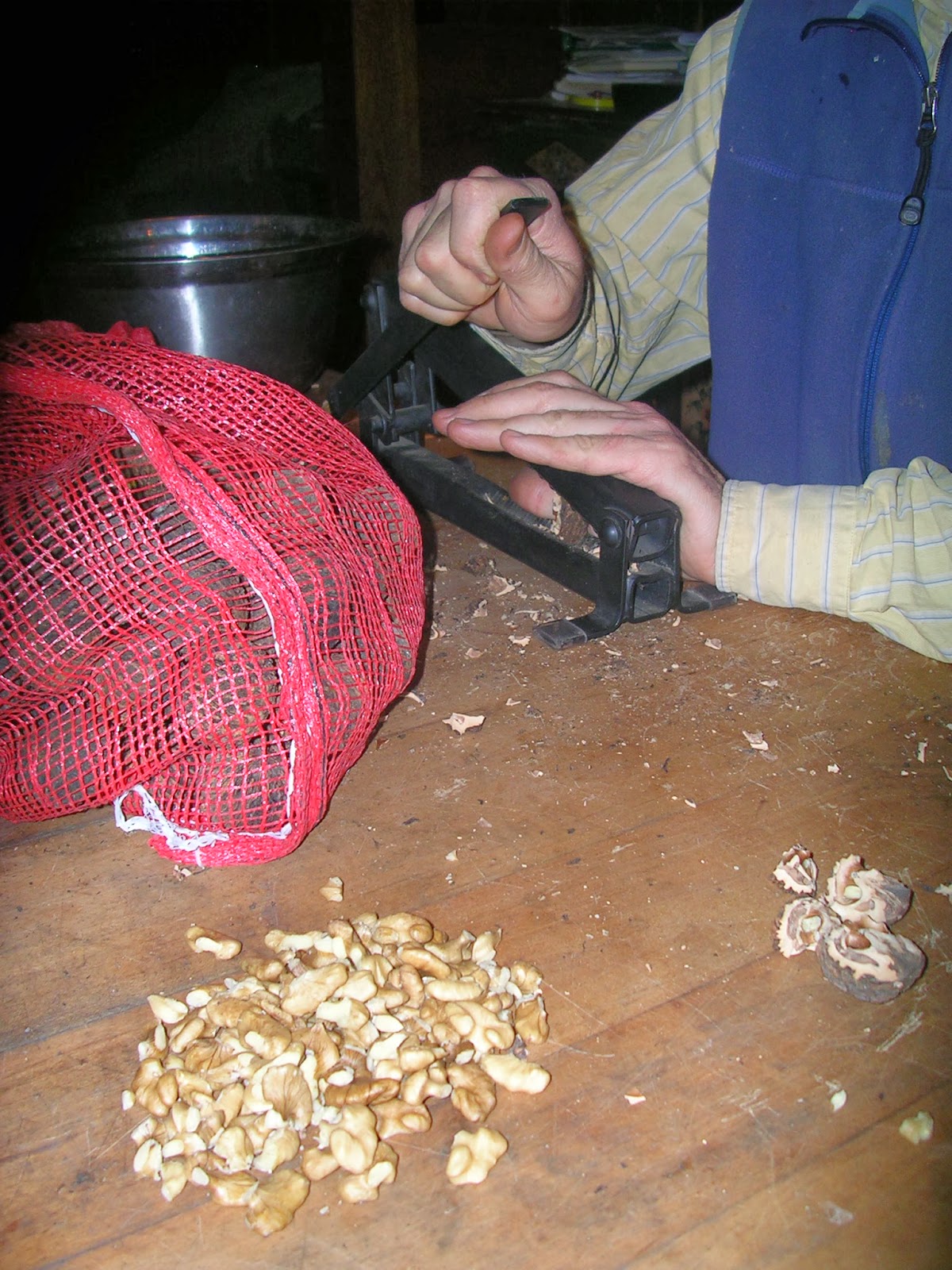
  Local pecans are in short supply this fall, likely due to the wet spring and summer.  The pecan farmer in Rowan County we normally get a good quantity of in-shell pecans from said there wasn't even enough pecans at his place this year for the squirrels.  Not having a local source for our usual staple nut has definitely added to our recent interest in black walnuts.  These we can source even more locally - from trees already growing wild on our own farm.  With the kids on board, feed sacks worth of walnuts were picked up from under two of our trees this year.  Word got out and a neighbor brought over a few more feed sacks full.  The hulls were rubbed off and the nuts washed.  Then we hung them in feed sacks to cure.  Now a little bit at a time, we're cracking them.  Many of them are shelling out with relatively large pieces.

Saturday, November 23, 2013

I like my greens


  Hattie and the rest of us have really taken to greens this fall.  A simple preparation has been working for whatever comes in from the garden - chard, mustard, kale, turnip, collards, tat soi, and mizuna.  Wash and chop into about one inch pieces.  In a cast iron frying pan, saute some chopped bacon or fat back until browned.  Or just add some fat.  Saute a chopped onion if you'd like.  Then add the greens and stir until they are wilted.  Add small amounts of broth or water as needed to keep them cooking until they reach the desired tenderness.  Add salt and pepper to taste.  Cider vinegar can be a nice addition as well.

Wednesday, November 20, 2013

Lemon grass (Cymbopogon citratus)

  It started so small this spring and then just kept growing and growing.  Here it is after it's 2nd hair cut, ready for a third (picture taken about a month ago).  We dried the cut leaves and have been using them for tea.  Stevia and lemon grass has become a favorite.  We got the small plant from a friend this spring and set it out after the last chance of frost.  It was so vigorous it out competed all the bermuda grass around it, making a small bush in a short time.  It is not winter hardy, so we divided the roots six ways and trimmed stems and potted up each new plant separately.  We're overwintering them in various locations - a sunny window, a friend's greenhouse, and an outbuilding that doesn't freeze - to determine what is the most successful.  We look forward to growing it in different places around the farm next year.

Wednesday, October 9, 2013

Persimmons

It's persimmon season and we're out in force collecting.  Our own tree is barely producing four persimmons a day but many neighbors have kindly allowed us to pick up from their trees.  A unique favorite is a seedless tree.  We've been freezing these whole to eat later with yogurt or as a partially frozen treat.  The others we've been processing into pulp and freezing mostly for persimmon puddings.


Stocked up

It's been a hard year on the farm with the constant rains this spring and summer  But we have been blessed.  Our larder overflows with the harvest.


Mushrooms

We were treated recently to a huge flush of mushrooms from our shitake logs.  We've been drying a lot of them.  They are also great fried with onions and frozen for later use on pizzas.


Roselle hibiscus


  It's funny how a food we'd never even heard of a few years ago has become such a staple of our current diet.  A friend gave us some roselle seeds a few years ago.  Since then, it's become a big crop for us, not only in the gardens but also as 'landscaping' bushes around the house.  


  A member of the hibiscus family, this okra relative grows to a huge beautiful bush, about 4 feet in diameter.  Along the dark red stems grow short lived hibiscus like flowers.  When the petals fall off, a thick calyx is left behind.  These flower parts are then harvested for a number of uses.  


  Most commonly, they are used for a red 'Koolaid' colored tea.  Roselle is actually one of the main ingredients of Red Zinger tea.  They can be used fresh or dried for tea.  If using fresh for tea, simply drop the whole pods in boiling water for 5-8 minutes, about 4 per cup depending on preferred strength.  To dry the roselle for later use, it is best to remove the green seed pod in the middle.  Our method is to slice horizontally across the bottom then pop out the green balls.  

With piles of roselle to process we've come up with our quickest method.  The first person uses a chef's knife to chop off the base end.  The other person punches the green balls out with the round end of a wooden spoon.

 
  While we enjoy the tea, roselle also makes a great mock cranberry sauce.  Again, remove the green seed pods.  Then boil the chopped red pieces with a little water, honey and maybe ginger.
  It's a tasty sauce with chicken or pork.  It makes a great topping on cheesecake.  Probably the most common way we use it though is as a colorful fruity tasting add-in to yogurt.  The sauce preserves great frozen in small jars.